If you've ever come home to a wilted plant, or worse, one rotting from too much attention, you're not alone. Overwatering and underwatering account for the vast majority of houseplant deaths. But what if the plant could simply tell you when it was thirsty, and drink exactly as much as it needed?
That's exactly what ollas do. And they've been doing it since ancient Persia.
What Is an Olla?
An olla (pronounced "oy-ya," from the Spanish word for "pot") is an unglazed terracotta clay vessel that is buried in soil near plant roots. You fill it with water through an opening at the top, and the porous clay walls allow water to slowly seep out into the surrounding soil over days, not all at once.
The mechanism is elegant: water moves through the clay by osmotic pressure. When soil is dry, it draws moisture through the porous walls. When soil is already saturated, it stops drawing. The plant's root system, in essence, controls its own irrigation.
4,000 Years of Proven Performance
Archaeological evidence of olla irrigation dates back to ancient Iran, where farmers buried large clay vessels next to their crops to water them through dry desert summers. The practice spread across the Middle East, North Africa, and into Central Asia, where water scarcity made every drop count.
In China and parts of South America, similar techniques evolved independently, suggesting that different cultures arrived at the same solution through observation of how clay interacts with soil moisture. This kind of convergent invention is a strong signal that it works.
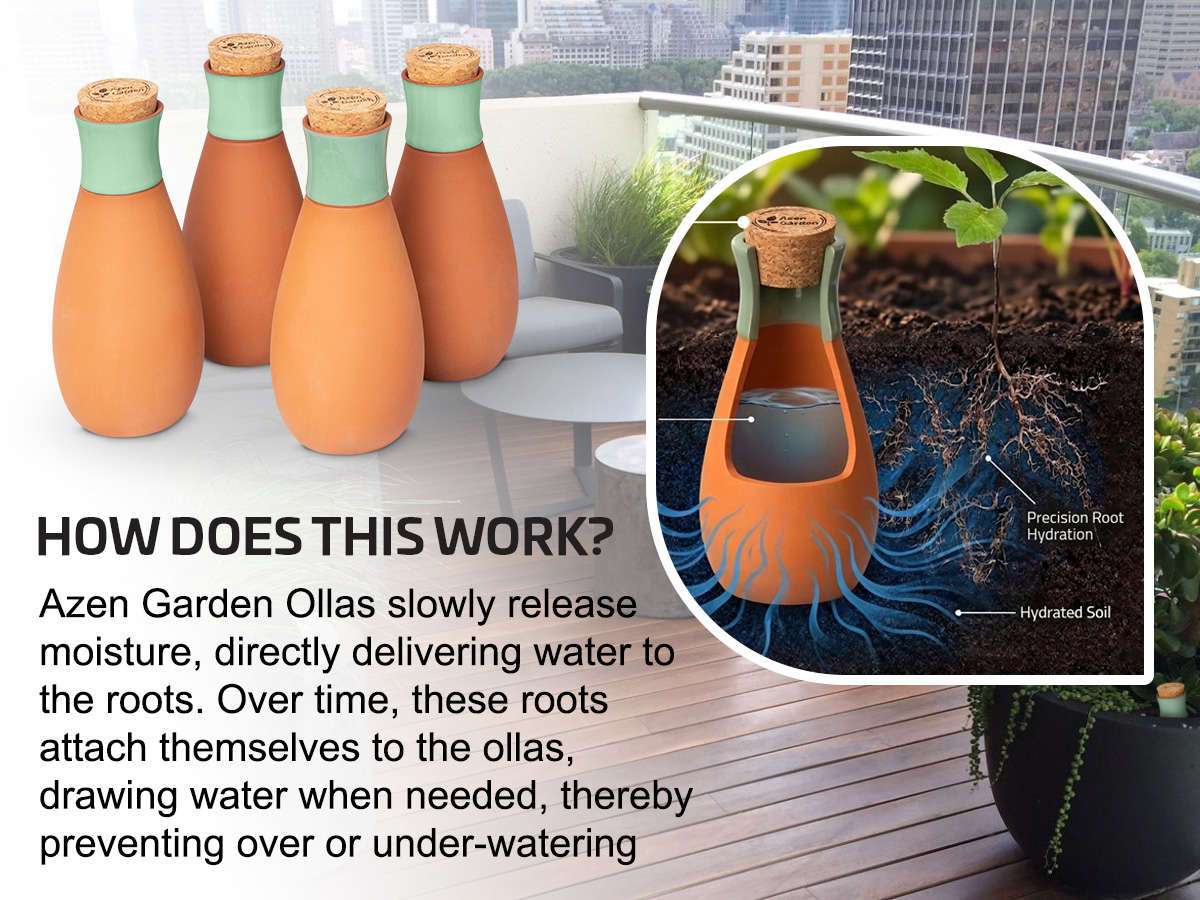
Azen Garden ollas sit inside your planter's soil, releasing water directly to the root zone as the plant needs it.
Why Ollas Beat Traditional Watering
Here's the problem with pouring water on top of soil: most of it doesn't reach the roots. Surface watering leads to:
- Evaporation: in warm, sunny conditions, water evaporates before reaching roots
- Surface runoff: water flows along the soil surface and out drainage holes without penetrating deep
- Uneven distribution: the top layer gets saturated while deeper root zones stay dry
- Wet leaf surfaces: water on foliage encourages fungal disease
- Fungus gnats: moist soil surfaces are breeding grounds for these common houseplant pests
Olla watering eliminates all of these problems simultaneously. Water is delivered below the surface, directly to roots, at exactly the rate the plant can absorb it. The surface stays dry, gnats can't breed, and you're not wasting water on evaporation.
How Azen Garden Brings Ollas to Modern Plants
Traditional ollas were large vessels designed for field crops, not exactly practical for your kitchen window. Azen Garden reimagined the concept for potted plants and indoor gardens.
Each Azen Garden globe is 6.3 inches tall, 3 inches wide, and holds 350ml of water. The terracotta body provides the same osmotic properties as ancient ollas, while the cork top makes refilling clean and easy. A set of four gives you enough for a full container garden, a windowsill herb collection, or your most demanding houseplants.
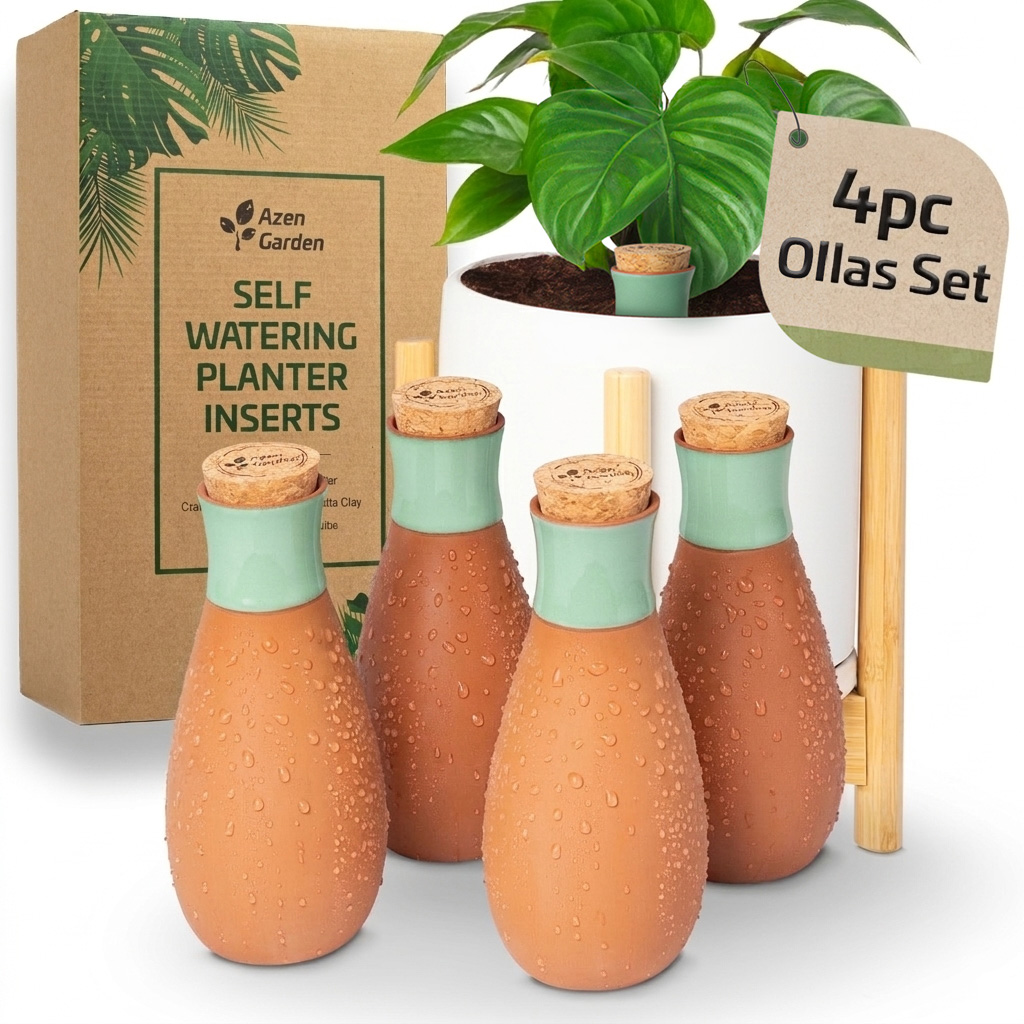
Each Azen Garden set includes 4 terracotta globes, cork stoppers, and a wooden display stand.
Which Plants Benefit Most?
Most plants that need consistent moisture will thrive with olla watering. The best candidates include:
- Vegetables: tomatoes, peppers, cucumbers, herbs, leafy greens
- Tropical houseplants: pothos, monstera, peace lily, philodendron
- Flowering plants: lavender, geraniums, impatiens, begonias
- Fruit: strawberries, dwarf citrus, blueberries in containers
The one exception: succulents and cacti prefer boom-and-bust watering cycles, with completely dry periods followed by a thorough soak. Since ollas maintain consistent moisture, they're not the right tool for desert plants.
The Bottom Line
If you care about your plants but find yourself either forgetting to water or reaching for the watering can too often, ollas are the most reliable solution available. They're passive, natural, chemical-free, and they've been proven effective for over four millennia.
Azen Garden makes it easy to bring this ancient technique to your modern home garden. No electricity, no apps, no complicated setup. Fill, insert, and let your plants do the rest.